King Arthur BakingIngredient Weight ChartUsed for established culinary measurements, baking methods, or formula guidance.
Open source ↗Unsifted Powdered Sugar Cups to Grams Converter
Convert unsifted powdered sugar from US cups to grams using a source backed culinary reference. One cup is approximately 113 g under the selected KitchenMathHub standard.
Powdered Sugar, unsifted
Ingredient-specific culinary reference. Volume-to-weight values are not universal across foods.
Result
113 g
1 cup powdered sugar, unsifted
Reference usedhigh confidence
Published measure1 US cup = 113 gSourceKing Arthur BakingMethodPublished culinary volume/weight equivalencyReviewedAug 11, 2026
Show calculation
Reference
1 cup-us = 113 gConverted amount
1 cup-us → 113 g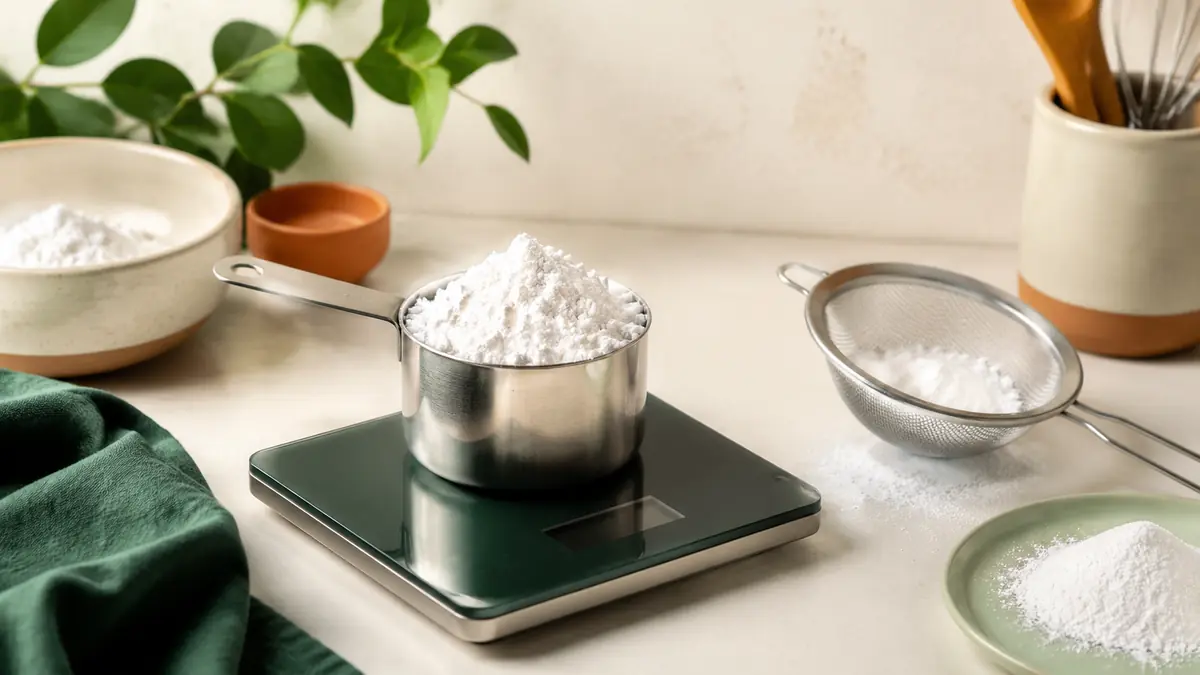
Unsifted Powdered Sugar cups to grams chart
| US cups | Approximate weight |
|---|---|
| ⅛ cups | 14 g |
| ¼ cups | 28 g |
| ⅓ cups | 38 g |
| ½ cups | 57 g |
| ⅔ cups | 75 g |
| ¾ cups | 85 g |
| 1 cup | 113 g |
| 1¼ cups | 141 g |
| 1½ cups | 170 g |
| 2 cups | 226 g |
| 2½ cups | 283 g |
| 3 cups | 339 g |
| 4 cups | 452 g |
How many grams are in a cup of powdered sugar?
1 US cup of unsifted powdered sugar is about 113 g on this page. This is the reference used by the powdered sugar cups to grams calculator and the chart above. It gives you one consistent starting point when a frosting, glaze, cookie, or cake recipe lists powdered sugar by volume but you want to use a kitchen scale.
½ cup of unsifted powdered sugar is about 57 g after practical rounding. A quarter cup is about 28 g, ¾ cup is about 85 g, 1½ cups is about 170 g, and 2 cups is about 226 g. All of these values come from the same 113 g per cup reference.
Powdered sugar cups to grams is not the same conversion as granulated sugar cups to grams. Powdered sugar has much smaller particles and traps air differently inside a cup. Use the ingredient named in the recipe instead of applying one sugar number to every type of sweetener.
Unsifted powdered sugar and sifted powdered sugar are different volume states
This page uses unsifted powdered sugar. That detail matters because sifting loosens clumps and adds air between the fine particles. The same mass can occupy more volume after sifting, so a cup measured after sifting can weigh less than a cup filled before sifting.
Follow the order written in the recipe. A line that says "1 cup powdered sugar, sifted" tells you to measure the cup first and sift it afterward. A line that says "1 cup sifted powdered sugar" can mean the sugar should be sifted before the cup is filled. Those instructions can lead to different volume amounts even though the ingredient name looks almost the same.
Powdered sugar is also called confectioners sugar or icing sugar in many kitchens. Product fineness and added starch can vary by brand and region, so use the recipe author's own gram value when one is supplied. The KitchenMathHub reference is most useful when the recipe gives only cups.
Powdered sugar cups to grams examples for frosting and baking
Example: 1 cup powdered sugar in grams
1 cup of unsifted powdered sugar is about 113 g. This amount can appear in small glaze recipes, cream cheese frosting, buttercream, dusting mixtures, cookies, and dessert fillings. Weighing the sugar helps you keep the sweetness and texture more consistent from one batch to the next.
Example: 2 cups powdered sugar in grams
2 cups of unsifted powdered sugar is about 226 g. This is useful when a frosting recipe is written with two cup measures but your scale is already on the counter. Add the sugar by weight, then follow the recipe for butter, cream, milk, flavoring, or other liquids.
Example: 3 cups powdered sugar in grams
3 cups of unsifted powdered sugar is about 339 g. Larger frosting batches can be easier to manage by weight because you do not need to fill and level several cups of very fine sugar.
Why weighing powdered sugar helps frosting consistency
Powdered sugar weight can affect frosting thickness. A cup that is packed more tightly can add more sugar than a lightly filled cup. That can make a buttercream or glaze thicker than expected, especially when the recipe uses only a small amount of liquid.
Use grams when you want to repeat the same frosting ratio. If your preferred buttercream uses 226 g powdered sugar with a set amount of butter and cream, you can reproduce that ratio more easily than trying to match the exact packing of two measuring cups every time.
Do not treat weight conversion as a substitution. Converting 2 cups powdered sugar to about 226 g keeps the ingredient the same. It does not mean that 226 g granulated sugar will behave the same way in frosting. Granulated sugar has a different texture and dissolves differently.
How to measure powdered sugar by volume when you do not have a scale
Break up obvious clumps before you fill the cup. Large hard clumps can leave empty spaces around them and make the measure less repeatable. Stir or loosen the sugar gently, then follow the recipe's sifting instruction.
Do not press powdered sugar into the cup unless the recipe tells you to pack it. Fill the cup without heavy pressure and level the top with a straight edge. This helps keep the cup closer to the unsifted reference used on this page.
Use the same cup standard throughout the recipe. This page uses a US culinary cup. Metric cups and some regional household measures can differ in volume, so changing the cup standard can change the expected mass.
Scale powdered sugar for a larger or smaller recipe
Scale the quantity first, then convert the final amount to grams. If a frosting uses 2 cups powdered sugar and you need 1.5 times the batch, the new amount is 3 cups. With the reference on this page, 3 cups is about 339 g.
Do not round each step separately. Keep the original quantity and the recipe scale factor as clean numbers, then round the final kitchen display. This reduces small errors when the batch factor is awkward, such as 1.25 or 1.75.
Use the Recipe Scaling Calculator when powdered sugar is only one part of the recipe. It can adjust butter, cream, flour, eggs, flavorings, and other ingredients with the same yield factor.
Convert powdered sugar grams back to cups
113 g of unsifted powdered sugar is about 1 US cup. About 57 g is ½ cup, 170 g is about 1½ cups, and 226 g is about 2 cups under the same reference.
Select powdered sugar before converting grams to cups. Do not divide by the granulated sugar, flour, or cocoa reference. Each ingredient has its own volume to weight relationship.
The Grams to Cups Calculator runs the ingredient reference in reverse. If the recipe already gives grams and you own a scale, keeping the original gram amount is usually the simplest option.
Use the right sugar reference in a full recipe conversion
A recipe converter should keep the sugar type attached to the quantity. Flour, granulated sugar, packed brown sugar, powdered sugar, cocoa, oats, and honey cannot all share one cup to gram factor. Their particle size, moisture, and packing behavior are different.
Use the recipe author's own weight when it is available. If a trusted recipe says its cup of powdered sugar equals a specific gram amount, that value was likely used when the recipe was tested. KitchenMathHub gives you a declared general reference when the original recipe does not provide one.
For a full ingredient list, use the Recipe Converter. It can keep known ingredients separate while converting a US recipe into practical metric measurements.
Powdered sugar in a metric recipe conversion
Keep powdered sugar in grams when you convert an American baking recipe to metric. If the original recipe lists 1½ cups unsifted powdered sugar, the current reference gives about 170 g. That gram amount can sit beside metric butter, cream, milk, cocoa, and other ingredients without forcing you to keep one isolated cup measurement.
Convert each ingredient with its own rule. A full recipe may contain flour, granulated sugar, powdered sugar, butter, and milk. Flour needs its own culinary weight reference. Powdered sugar needs another. Milk is often clearer in milliliters. The best recipe conversion is a set of ingredient aware changes, not one number applied to everything.
This matters when you share a recipe internationally. A reader who uses grams can follow the ingredient list without guessing what kind of cup the author meant, while the source recipe can still keep its original cup based quantities.
Common powdered sugar measuring mistakes
Do not use the granulated sugar cup weight for powdered sugar. Granulated crystals and fine powdered sugar fill a cup differently. Using the wrong reference can change a frosting or glaze by a noticeable amount.
Do not ignore the word sifted. Sifting changes the volume state. Read whether the recipe says to sift before measuring or after measuring, especially when the recipe is written entirely in cups.
Do not pack powdered sugar unless the recipe asks for it. Pressing it down can fit more mass into the cup. For the unsifted reference used here, loosen obvious clumps, fill the cup lightly, and level the top.
If a recipe is very sensitive or comes from a pastry source that publishes exact weights, use the author's own gram amount. The purpose of this page is to give you a clear, consistent reference when that information is missing.
Questions about measuring unsifted powdered sugar
How many grams are in 1 cup of powdered sugar?
About 113 g for unsifted powdered sugar with the reference used on this page.
How many grams are in half a cup of powdered sugar?
57 g.
How many grams are in a quarter cup of powdered sugar?
28 g.
How many grams are in 1½ cups of powdered sugar?
170 g.
How many grams are in 2 cups of powdered sugar?
226 g.
Is 113 grams of powdered sugar 1 cup?
Yes. 113 g is about 1 US cup of unsifted powdered sugar under the selected reference.
Does sifting powdered sugar change the cup weight?
Yes. Sifting adds air and can change how much sugar fits into the same cup volume, so the preparation order matters.
Is powdered sugar the same as granulated sugar for conversion?
No. Their particle structure and cup weights are different, so each needs its own reference.
Should I pack powdered sugar into the cup?
Not unless the recipe says to pack it. Use a light fill and level method for the unsifted reference on this page.
Is weighing powdered sugar useful for frosting?
Yes. Weight can make the sugar to butter or liquid ratio easier to repeat in frosting and glaze recipes.
Can I scale powdered sugar for a larger frosting batch?
Yes. Apply the yield factor with the Recipe Scaling Calculator before final rounding.
Can I convert powdered sugar grams back to cups?
Yes. Select powdered sugar in the Grams to Cups Calculator.
Calculation transparency
Read methodologyHow to interpret this result
Result typeIngredient-specific reference
Calculation basisPublished culinary volume and weight equivalencies
Sources shown2
Latest source reviewAug 11, 2026
Cup-to-weight values depend on the ingredient and its state. A recipe author's tested gram value should take priority when the recipe provides one.
Sources and methodology
These are the references used for data, conventions, safety targets, or calculation context on this page. Review dates show when KitchenMathHub last checked the cited source.
National Institute of Standards and TechnologyMetric Kitchen: Cooking Measurement EquivalenciesUsed for defined measurement guidance or public food-safety guidance where applicable.
Open source ↗