King Arthur BakingIngredient Weight ChartUsed for established culinary measurements, baking methods, or formula guidance.
Open source ↗All Purpose Flour Cups to Grams Converter
Convert all purpose flour from US cups to grams using a source backed culinary reference. One cup is approximately 120 g under the selected KitchenMathHub standard.
All-Purpose Flour
Ingredient-specific culinary reference. Volume-to-weight values are not universal across foods.
Result
120 g
1 cup all-purpose flour
Reference usedhigh confidence
Published measure1 US cup = 120 gSourceKing Arthur BakingMethodPublished culinary volume/weight equivalencyReviewedAug 11, 2026
Show calculation
Reference
1 cup-us = 120 gConverted amount
1 cup-us → 120 g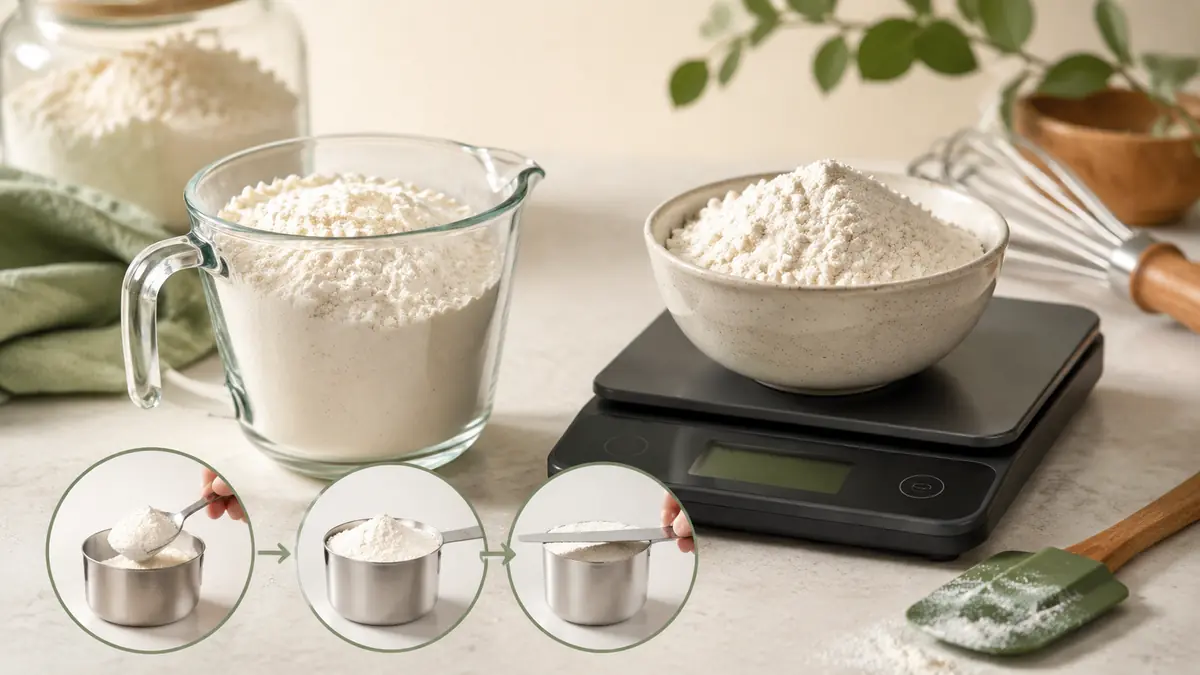
All Purpose Flour cups to grams chart
| US cups | Approximate weight |
|---|---|
| ⅛ cups | 15 g |
| ¼ cups | 30 g |
| ⅓ cups | 40 g |
| ½ cups | 60 g |
| ⅔ cups | 80 g |
| ¾ cups | 90 g |
| 1 cup | 120 g |
| 1¼ cups | 150 g |
| 1½ cups | 180 g |
| 2 cups | 240 g |
| 2½ cups | 300 g |
| 3 cups | 360 g |
| 4 cups | 480 g |
How many grams are in a cup of flour?
1 US cup of all purpose flour is about 120 g on this page. KitchenMathHub uses that reference for the flour cups to grams calculator, the conversion chart, and the examples below. It gives you one consistent value when a recipe lists cups but you want to bake with a scale.
½ cup of flour is about 60 g. A quarter cup is about 30 g, ¾ cup is about 90 g, 1½ cups is about 180 g, and 2 cups is about 240 g. These amounts all come from the same 120 g per cup reference, so the chart stays internally consistent.
Flour cups to grams is an ingredient conversion, not a plain unit conversion. A cup measures volume, while grams measure mass. The answer depends on what fills the cup. Sugar, butter, cocoa, oats, and honey all have different weights per cup, so you should not reuse the flour number for another ingredient.
Why 1 cup flour in grams can vary between recipes
A cup of flour can weigh differently depending on how you fill it. Flour holds air between its particles and can compact when it is scooped or pressed. A cup filled gently can contain less flour than a cup pushed into a bag and packed tightly.
The recipe author's own gram value should take priority when it is provided. If a recipe says that its 1 cup flour equals a specific number of grams, that value reflects the standard used to develop that recipe. KitchenMathHub is useful when the recipe does not provide a weight or when you need one consistent general flour reference.
Flour type also matters. This page is for all purpose flour. Bread flour, cake flour, whole wheat flour, almond flour, oat flour, and other products can have different particle sizes and culinary references. Do not assume that every flour uses 120 g per cup.
How to measure all purpose flour by volume
Use a light fill and level the cup when you must measure flour by volume. Avoid pressing the flour into the cup. A gentle method reduces compaction and makes the volume measure more repeatable.
Spoon and level flour for a more consistent cup
Loosen the flour first if it has settled. Add flour into the measuring cup without packing it down, then level the top with a straight edge. The goal is not to force as much flour as possible into the cup. The goal is to fill the cup in a repeatable way.
Use grams when baking accuracy matters. A scale removes much of the variation caused by scooping, packing, and leveling. This is especially helpful for cakes, cookies, muffins, bread dough, pastry, pancakes, and recipes that depend on a careful flour to liquid balance.
Flour cups to grams examples for baking
Example: 1½ cups flour in grams
1½ cups of all purpose flour is about 180 g. The calculation is 1.5 multiplied by 120. If a cookie recipe calls for 1½ cups flour, you can place the bowl on a scale, tare it, and add about 180 g instead of filling one full cup and one half cup.
Example: 2 cups flour in grams
2 cups of all purpose flour is about 240 g. This amount appears often in cakes, muffins, pancakes, cookies, quick breads, and other baking recipes. Measuring 240 g directly can be faster when you already have a kitchen scale on the counter.
Example: 2½ cups flour in grams
2½ cups of all purpose flour is about 300 g. This conversion is useful when scaling a recipe or moving an American cup based recipe into a metric style ingredient list.
Convert flour cups to grams when scaling a recipe
Scale the flour amount before you round the final gram result. Suppose a recipe uses 2 cups flour and serves 8, but you need 12 servings. The serving factor is 1.5. The normalized flour amount becomes 3 cups, which converts to about 360 g with the reference used here.
Do not change the baking time just because the flour amount increased. Ingredient scaling and cooking time are different problems. A larger batch may need a different pan, more pans, or a different food depth. Those changes affect how heat moves through the food.
Use the Recipe Scaling Calculator when several ingredients need the same serving adjustment. If you also want to change cups to grams across the full ingredient list, use the Recipe Converter.
Flour grams to cups works in reverse too
120 g flour is about 1 cup. If a metric recipe gives 180 g flour, that is about 1½ cups. If it gives 240 g, that is about 2 cups. The reverse calculation uses the same 120 g reference, so cups to grams and grams to cups stay consistent.
Keep the gram amount when you already have a scale. Converting 240 g flour into 2 cups is useful if cups are the only tools available, but the original 240 g amount is usually easier to reproduce in baking.
The Grams to Cups Calculator can convert flour and other supported ingredients in the reverse direction. Select the ingredient rather than treating all gram amounts as the same volume.
Flour weight per cup and recipe consistency
A flour weight per cup is a culinary reference, not a promise that every physical cup will weigh exactly that amount. Brand, humidity, storage, flour type, particle size, and measuring technique can all affect what lands in the cup.
Consistency matters more than false precision. If you use one reliable flour reference throughout a recipe and measure the same way each time, your results are easier to repeat. Mixing one site's flour standard with another site's sugar standard and a third site's cup convention can make a converted recipe harder to understand.
KitchenMathHub keeps the selected source attached to the calculation. That lets you see the assumption behind the answer instead of receiving an unexplained number.
Questions about measuring all purpose flour
How many grams are in 1 cup of all purpose flour?
About 120 g with the KitchenMathHub reference used on this page.
How many grams are in half a cup of flour?
60 g.
How many grams are in a quarter cup of flour?
30 g.
How many grams are in 1½ cups of flour?
180 g.
How many grams are in 2 cups of flour?
240 g.
Is 120 grams of flour 1 cup?
Yes. 120 g is about 1 US cup of all purpose flour under the selected KitchenMathHub reference.
Should I scoop flour directly from the bag?
A light fill and level method is more consistent than pressing or packing flour into the cup.
Does bread flour use the same grams per cup?
Not automatically. Different flour types can have different culinary references, so choose the correct ingredient when possible.
Why can a cup of flour weigh more than 120 g?
Packing, scooping method, humidity, flour type, and other physical differences can put more flour into the same cup volume.
Is it better to weigh flour?
Yes when the recipe provides a gram amount and you have a reliable scale. Weight is usually easier to repeat in baking.
Can I scale flour and then convert it to grams?
Yes. Use the Recipe Scaling Calculator first, then convert the final normalized quantity.
Can I convert flour grams back to cups?
Yes. Use the Grams to Cups Calculator with all purpose flour selected.
Calculation transparency
Read methodologyHow to interpret this result
Result typeIngredient-specific reference
Calculation basisPublished culinary volume and weight equivalencies
Sources shown2
Latest source reviewAug 11, 2026
Cup-to-weight values depend on the ingredient and its state. A recipe author's tested gram value should take priority when the recipe provides one.
Sources and methodology
These are the references used for data, conventions, safety targets, or calculation context on this page. Review dates show when KitchenMathHub last checked the cited source.
National Institute of Standards and TechnologyMetric Kitchen: Cooking Measurement EquivalenciesUsed for defined measurement guidance or public food-safety guidance where applicable.
Open source ↗