King Arthur BakingIngredient Weight ChartUsed for established culinary measurements, baking methods, or formula guidance.
Open source ↗Unsweetened Cocoa Powder Cups to Grams Converter
Convert unsweetened cocoa powder from US cups to grams using a source backed culinary reference. One cup is approximately 84 g under the selected KitchenMathHub standard.
Cocoa Powder, unsweetened
Ingredient-specific culinary reference. Volume-to-weight values are not universal across foods.
Result
84 g
1 cup cocoa powder, unsweetened
Reference usedhigh confidence
Published measure0.5 US cup = 42 gSourceKing Arthur BakingMethodPublished culinary volume/weight equivalencyReviewedAug 11, 2026
Show calculation
Reference
0.5 cup-us = 42 gConverted amount
1 cup-us → 84 g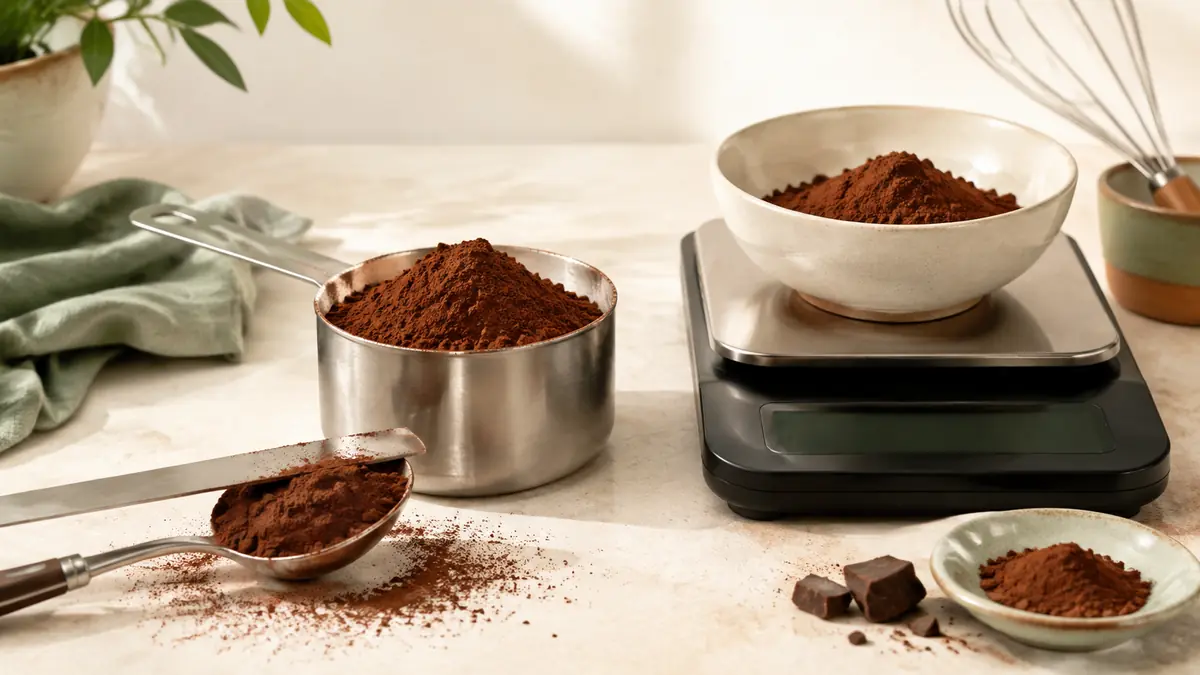
Unsweetened Cocoa Powder cups to grams chart
| US cups | Approximate weight |
|---|---|
| ⅛ cups | 11 g |
| ¼ cups | 21 g |
| ⅓ cups | 28 g |
| ½ cups | 42 g |
| ⅔ cups | 56 g |
| ¾ cups | 63 g |
| 1 cup | 84 g |
| 1¼ cups | 105 g |
| 1½ cups | 126 g |
| 2 cups | 168 g |
| 2½ cups | 210 g |
| 3 cups | 252 g |
| 4 cups | 336 g |
How many grams are in a cup of cocoa powder?
1 US cup of unsweetened cocoa powder is about 84 g on this page. The underlying reference gives 42 g for ½ cup, which scales to about 84 g for a full cup. KitchenMathHub uses the same relationship in the cocoa powder cups to grams chart and calculator.
½ cup cocoa powder is about 42 g. A quarter cup is about 21 g, ¾ cup is about 63 g, 1½ cups is about 126 g, and 2 cups is about 168 g. These values are useful for brownies, chocolate cakes, cookies, muffins, frostings, and other recipes that use unsweetened cocoa.
Cocoa powder is much lighter per cup than granulated sugar or butter. That is why a plain cup to gram formula does not work. A cup measures volume, while grams measure mass, so the ingredient identity must stay attached to the conversion.
Natural cocoa powder and Dutch process cocoa are not just measurement labels
Use the cocoa type named in the recipe. Natural unsweetened cocoa and Dutch process cocoa can differ in acidity, flavor, color, and how they interact with leavening. Converting cups to grams does not make the two types interchangeable.
This page is a weight conversion, not a cocoa substitution guide. If your recipe calls for natural cocoa, keep natural cocoa after conversion. If it calls for Dutch process cocoa, use the requested type and follow a reference that matches that product when precision matters.
Particle size and processing can also affect how a cocoa product settles in a cup. If the recipe developer gives a gram value for the exact cocoa used in testing, use that recipe specific value first.
Cocoa powder conversion examples for brownies and cakes
Example: half cup cocoa powder in grams
½ cup unsweetened cocoa powder is about 42 g. This is a common size for brownie, cake, and cookie recipes. Weighing 42 g can be easier than trying to judge whether a very light powder has settled inside the measuring cup.
Example: 1 cup cocoa powder in grams
1 cup unsweetened cocoa powder is about 84 g. A larger chocolate cake or brownie batch may use this amount. Add the cocoa by weight if the recipe is sensitive to the balance between dry ingredients and liquid.
Example: ⅓ cup cocoa powder in grams
⅓ cup cocoa powder is about 28 g. This smaller conversion is useful for muffins, frostings, cookies, and recipes that need chocolate flavor without a full cup of cocoa.
How to measure cocoa powder without packing it
Loosen cocoa powder before filling a measuring cup. Fine cocoa can settle during storage. Stir it gently if the surface looks compact, then add it to the cup without pressing down.
Level the top instead of heaping the cup. A heaped measure can add more cocoa than the recipe expects. Heavy packing can do the same. A light fill and level method gives you a more repeatable volume measure.
Use grams when the chocolate balance matters. Cocoa contributes dry solids, bitterness, color, and chocolate flavor. Too much can change batter thickness and taste, while too little can weaken the chocolate profile.
Tablespoons of cocoa powder to grams
1 US tablespoon of cocoa powder is about 5.3 g when derived from the 84 g per cup reference. A US cup contains 16 tablespoons, so 84 divided by 16 gives about 5.25 g per tablespoon. Treat this as a derived practical value rather than a separate direct measurement standard.
2 tablespoons are about 10.5 g. Four tablespoons, which equal ¼ cup, are about 21 g. Eight tablespoons, which equal ½ cup, are about 42 g.
If your recipe uses only one or two tablespoons, a small scale that reads fine increments can be useful. If your scale is not sensitive at low weights, volume spoons may be more practical for tiny amounts.
Scale cocoa powder in a chocolate recipe
Scale cocoa with the same recipe factor as the other scalable ingredients. If a brownie recipe uses ½ cup cocoa and you make a double batch, the new amount is 1 cup, or about 84 g with the reference used here.
Keep the cocoa type unchanged when scaling. Doubling a recipe does not turn natural cocoa into Dutch process cocoa, and converting to grams does not change the leavening system.
Use the Recipe Scaling Calculator for a complete batch change. It can scale cocoa, flour, sugar, butter, eggs, and other ingredients together from the original yield to the target yield.
Convert cocoa powder grams back to cups
84 g cocoa powder is about 1 cup under this reference. About 42 g is ½ cup, 21 g is ¼ cup, and 126 g is about 1½ cups.
Choose cocoa powder in the reverse calculator. Do not use the flour or sugar gram per cup number. The Grams to Cups Calculator keeps the ingredient reference attached to the reverse conversion.
If a metric recipe already lists cocoa in grams and you have a scale, keep the gram amount. Convert back to cups only when volume tools are more practical in your kitchen.
Why cocoa powder cup weights can differ between sources
Different cocoa products and measuring methods can produce different cup weights. Fineness, settling, brand, processing, moisture, and how firmly the cup is filled can all affect the mass inside the same volume.
A declared reference is more useful than an unexplained average. KitchenMathHub keeps the source attached to the selected conversion so you can see the assumption behind the result.
For a complete American to metric recipe change, use the Recipe Converter. It can treat cocoa as cocoa, flour as flour, and liquids as liquids instead of applying one generic factor across the recipe.
Cocoa powder and the dry ingredient balance
Cocoa powder counts as part of the dry ingredient load in many baking recipes. Adding too much can make a batter or dough feel drier and can increase bitterness. That is one reason accurate cocoa measurement matters in brownies, chocolate cakes, cookies, and muffins.
Weight conversion helps you repeat the same chocolate intensity. If your favorite brownie uses 42 g cocoa, weighing 42 g each time avoids the difference between one lightly filled half cup and another half cup that was packed more firmly.
Keep the rest of the recipe in balance. Converting cocoa from cups to grams does not mean you should change the flour, sugar, fat, eggs, or liquid unless you are also scaling the recipe. Measurement conversion and recipe reformulation are separate tasks.
US cups, metric recipes, and cocoa powder
Use the US cup reference only when the source recipe uses a US style cup. Household volume standards can differ by region. A metric cup is not always the same volume as a US culinary cup.
Grams remove the cup size question once the cocoa is weighed. If you convert ½ US cup cocoa to 42 g, the final metric ingredient list can simply say 42 g cocoa powder. The reader no longer needs to know which cup size produced the original amount.
This is useful when converting American recipes for readers in the UK, Europe, Australia, or any kitchen where scales are the normal baking tool. It also makes recipe scaling cleaner because the gram amount can be multiplied directly.
Common cocoa powder conversion mistakes
Do not pack cocoa powder into the cup. Pressing fine cocoa down can add more dry ingredient than the reference expects. A light fill and level method is more consistent.
Do not treat cocoa type as unimportant. Natural and Dutch process cocoa can behave differently in a recipe. Converting both to grams does not remove those differences.
Do not use a chocolate bar conversion for cocoa powder. Cocoa powder, baking chocolate, chocolate chips, and melted chocolate have different compositions. They are separate ingredients even when they all add chocolate flavor.
Questions about measuring unsweetened cocoa powder
How many grams are in 1 cup of cocoa powder?
About 84 g with the unsweetened cocoa reference used on this page.
How many grams are in half a cup of cocoa powder?
42 g.
How many grams are in a quarter cup of cocoa powder?
21 g.
How many grams are in 1½ cups of cocoa powder?
126 g.
How many grams are in 2 cups of cocoa powder?
168 g.
Is 84 grams of cocoa powder 1 cup?
Yes. 84 g is about 1 US cup under the selected unsweetened cocoa reference.
Should cocoa powder be packed into the cup?
No. Loosen it, fill the cup without pressing, and level the top for a more repeatable volume measure.
Can I substitute Dutch process cocoa for natural cocoa after conversion?
Not based on weight conversion alone. Cocoa type can affect flavor, acidity, and leavening behavior, so follow the recipe.
How many grams are in a tablespoon of cocoa powder?
About 5.3 g when derived from the 84 g per US cup reference.
Is weighing cocoa helpful for brownies and cakes?
Yes. Cocoa is light and easy to overfill by volume, so grams can improve repeatability.
Can I scale cocoa powder with a recipe?
Yes. Keep the cocoa type unchanged and apply the recipe factor with the Recipe Scaling Calculator.
Can I convert cocoa grams back to cups?
Yes. Select cocoa powder in the Grams to Cups Calculator.
Calculation transparency
Read methodologyHow to interpret this result
Result typeIngredient-specific reference
Calculation basisPublished culinary volume and weight equivalencies
Sources shown2
Latest source reviewAug 11, 2026
Cup-to-weight values depend on the ingredient and its state. A recipe author's tested gram value should take priority when the recipe provides one.
Sources and methodology
These are the references used for data, conventions, safety targets, or calculation context on this page. Review dates show when KitchenMathHub last checked the cited source.
National Institute of Standards and TechnologyMetric Kitchen: Cooking Measurement EquivalenciesUsed for defined measurement guidance or public food-safety guidance where applicable.
Open source ↗