King Arthur BakingIngredient Weight ChartUsed for established culinary measurements, baking methods, or formula guidance.
Open source ↗Butter Cups to Grams Converter
Convert butter from US cups to grams using a source backed culinary reference. One cup is approximately 226 g under the selected KitchenMathHub standard.
Butter
Ingredient-specific culinary reference. Volume-to-weight values are not universal across foods.
Result
226 g
1 cup butter
Reference usedhigh confidence
Published measure0.5 US cup = 113 gSourceKing Arthur BakingMethodPublished culinary volume/weight equivalencyReviewedAug 11, 2026
Show calculation
Reference
0.5 cup-us = 113 gConverted amount
1 cup-us → 226 g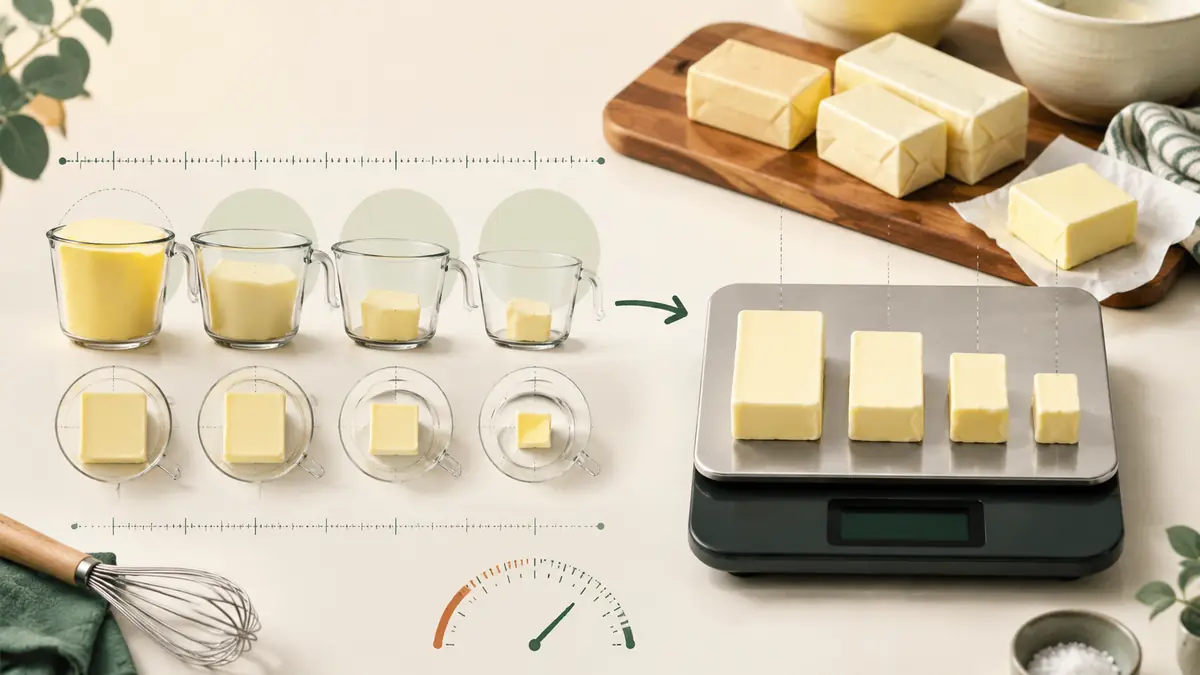
Butter cups to grams chart
| US cups | Approximate weight |
|---|---|
| ⅛ cups | 28 g |
| ¼ cups | 57 g |
| ⅓ cups | 75 g |
| ½ cups | 113 g |
| ⅔ cups | 151 g |
| ¾ cups | 170 g |
| 1 cup | 226 g |
| 1¼ cups | 283 g |
| 1½ cups | 339 g |
| 2 cups | 452 g |
| 2½ cups | 565 g |
| 3 cups | 678 g |
| 4 cups | 904 g |
How many grams are in a cup of butter?
1 US cup of butter is about 226 g with the reference used here. The source reference is 113 g for ½ cup, so a full cup is twice that amount. This gives a simple base for the butter cups to grams calculator and chart.
½ cup of butter is about 113 g. A quarter cup is about 57 g after practical rounding, ¾ cup is about 170 g, 1½ cups is about 339 g, and 2 cups is about 452 g.
Butter is often easier to weigh than to pack into a cup. If your butter package already shows grams or clear portion marks, you can often measure the amount without using a measuring cup at all.
Butter cups to grams for cakes, cookies, and pastry
Butter quantity affects more than richness. It contributes fat, water, flavor, tenderness, and structure. In cookies it can influence spread. In cake it affects the creaming stage and crumb. In pastry it can affect layers and texture.
Use the quantity stated by the recipe before changing the butter form. A recipe may call for softened butter, melted butter, cold butter, or butter cut into cubes. The weight can stay the same while the physical state changes how the ingredient is mixed.
That means cups to grams answers one question: how much butter by mass corresponds to the listed cup amount. It does not replace preparation instructions such as soften, melt, chill, cream, or cut in.
Butter conversion examples
Example: half cup butter in grams
½ cup butter is about 113 g. This is one of the most useful butter conversions because many American baking recipes use half cup amounts.
Example: quarter cup butter in grams
¼ cup butter is about 57 g after practical rounding. The raw half of 113 g is 56.5 g. A normal kitchen display rounds that to a useful gram amount.
Example: 1 cup butter in grams
1 cup butter is about 226 g. If a recipe calls for 2 cups, the weight becomes about 452 g.
Softened butter, melted butter, and cold butter
The gram weight stays useful even when the butter state changes. If a recipe needs 113 g butter, you can weigh that amount before softening or melting it unless the recipe tells you otherwise.
Preparation state still matters for the finished recipe. Softened butter can trap air during creaming. Melted butter mixes differently and can change cookie spread or cake texture. Cold butter is important in some pastry methods. Do not treat those instructions as optional just because the mass is the same.
If a recipe lists melted butter by volume, follow the recipe's context. The converter provides the reference relationship, but the recipe developer's stated method should guide when and how the butter is measured or melted.
Butter sticks, package marks, cups, and grams
Package markings can be more convenient than a measuring cup. Many butter packages provide gram, ounce, or portion guidance. If the package gives the exact amount you need, use those marks or a scale rather than pressing butter into a cup.
113 g butter is about ½ cup with the KitchenMathHub reference. About 226 g is 1 cup. These relationships also make it easy to check a package label against a cup based recipe.
If you need the reverse direction, use the Grams to Cups Calculator. Select butter so the calculator uses the butter reference rather than a flour or sugar value.
Scale butter in a baking recipe
Butter scales with the recipe factor for ordinary quantity changes. If a recipe uses ½ cup butter and you double the batch, the new amount is 1 cup, or about 226 g.
Scale from the normalized amount before final rounding. This matters when the multiplier is not a clean whole number. A 1.5 times batch of 113 g butter becomes 169.5 g before practical display rounding.
Use the Recipe Scaling Calculator when butter is only one part of a larger ingredient list. The tool can scale flour, sugar, eggs, leaveners, liquids, and other quantities together so the formula stays organized.
Butter cups to grams when changing cake pan size
A larger cake pan can require more butter because the whole recipe may need a larger scale factor. For example, moving from one round pan size to another can change the batter amount needed to keep a similar cake layer height.
Pan scaling should use the pan geometry first. Do not guess the new butter amount from the pan diameter alone. The Cake Pan Conversion Calculator compares pan area or capacity, then the recipe scaler can apply that factor to butter and the other ingredients.
Cooking time should still be reviewed separately. Increasing butter and batter quantity does not mean you multiply the baking time by the same factor.
Choose the easiest way to measure butter in your kitchen
Use the scale when the recipe gives grams. Put the bowl on the scale, tare it, and add the required butter weight. This avoids filling a cup and scraping sticky butter back out.
Use cup conversion when the recipe gives volume and your package uses weight. If the recipe calls for ¾ cup butter, the page gives you about 170 g. You can then cut or weigh that amount directly from the package.
Keep salt choice separate from measurement conversion. Salted butter and unsalted butter can have the same practical mass for the requested quantity, but they are not always interchangeable in flavor. Follow the recipe's ingredient choice even after you convert cups to grams.
Why another butter conversion can be slightly different
Small differences can come from reference standards and rounding. One source may display a half cup as 113 g, while another may round the same practical amount differently.
Use the recipe's own weight when it gives one. If a trusted recipe lists both cups and grams, its gram value is usually the best choice for reproducing that recipe.
KitchenMathHub keeps one declared reference inside the calculator so every amount on the page comes from the same relationship. That consistency is more useful than mixing several values from unrelated charts.
Questions about measuring butter
How many grams are in 1 cup of butter?
About 226 g with the reference used on this page.
How many grams are in half a cup of butter?
113 g.
How many grams are in a quarter cup of butter?
57 g.
How many grams are in 1½ cups of butter?
339 g.
How many grams are in 2 cups of butter?
452 g.
Is 113 grams of butter half a cup?
Yes. 113 g is about ½ US cup with the selected butter reference.
Is 226 grams of butter 1 cup?
Yes. A full cup is about 226 g under the same reference.
Should I measure butter by weight?
Weight is usually easy and repeatable when your package or scale shows grams.
Does melted butter weigh the same as solid butter?
The same amount of butter keeps the same mass, but the recipe's preparation state still affects how it mixes and behaves.
Can I use package marks instead of a measuring cup?
Yes. If the package gives a reliable gram or portion mark for the amount you need, that can be simpler than measuring by volume.
Can I scale butter for a larger recipe?
Yes. Apply the recipe factor with the Recipe Scaling Calculator.
Can I convert butter grams back to cups?
Yes. Select butter in the Grams to Cups Calculator.
Calculation transparency
Read methodologyHow to interpret this result
Result typeIngredient-specific reference
Calculation basisPublished culinary volume and weight equivalencies
Sources shown2
Latest source reviewAug 11, 2026
Cup-to-weight values depend on the ingredient and its state. A recipe author's tested gram value should take priority when the recipe provides one.
Sources and methodology
These are the references used for data, conventions, safety targets, or calculation context on this page. Review dates show when KitchenMathHub last checked the cited source.
National Institute of Standards and TechnologyMetric Kitchen: Cooking Measurement EquivalenciesUsed for defined measurement guidance or public food-safety guidance where applicable.
Open source ↗